
The most famous country songs include Dolly Parton’s “Jolene” (1973), John Denver’s “Take Me Home, Country Roads” (1971), Johnny Cash’s “Ring of Fire” (1963) and “I Walk the Line” (1956), Patsy Cline’s “Crazy” (1961), and, for the dance floor, Billy Ray Cyrus’s “Achy Breaky Heart” (1992). This collection of famous country music goes further: 40 songs organized by era, with the exact year and what earned each one a place in music history.
You’ll also find a quick history of the genre, the real story behind “Country Roads,” the songs that get a line-dance floor moving, and ideas for putting together a party playlist. All song titles, artists, and years have been checked.
Where country music came from: a century of history in seven milestones
Country music began in the rural American South, at the crossroads of ballads from the British Isles, fiddle music played at country dances, the banjo rooted in African American music, and the blues. To understand why certain songs became standards, it helps to know a few key dates.
1925–1927: Radio and the first records
On November 28, 1925, Nashville radio station WSM aired a rural music program for the first time: the WSM Barn Dance. It became the Grand Ole Opry in 1927 and has been running ever since—it’s the longest-running radio show in American history. It was held at the Ryman Auditorium from 1943 to 1974, then moved to the Grand Ole Opry House.
Between July 25 and August 5, 1927, record producer Ralph Peer recorded regional musicians for Victor Records in Bristol, a city on the Tennessee-Virginia border. The Carter Family made its first recordings there on August 1 and 2, and Jimmie Rodgers recorded on August 4. These Bristol Sessions are often called the “big bang” of modern country music.
1940s–1950s: Hank Williams and honky-tonk
After the war, country music moved off the front porch and into bars—the famous honky-tonks. With electric guitar, steel guitar, fiddle, and lyrics about drinking and heartbreak, Hank Williams became its leading figure before dying on January 1, 1953, at age 29. “Your Cheatin’ Heart” came out a few weeks later. In 1952, Kitty Wells became the first woman to reach No. 1 on Billboard’s country chart as a solo artist with “It Wasn’t God Who Made Honky Tonk Angels.”
Late 1950s: The Nashville Sound
Facing competition from rock ’n’ roll, Nashville’s music industry polished its sound with strings, backing vocals, and crooner-style singing. Producers Chet Atkins and Owen Bradley were the architects of the Nashville Sound, with Patsy Cline and Jim Reeves as its biggest stars.
1970s: Outlaw country
In reaction to a sound seen as too polished, Waylon Jennings and Willie Nelson took control of their records, favoring a rawer sound, long hair, and personal lyrics. The compilation Wanted! The Outlaws (1976), featuring Jessi Colter and Tompall Glaser, became the first country album certified platinum by the RIAA.
1990s: Country-pop fills stadiums
Garth Brooks filled stadiums with a rock-inspired show, while Shania Twain blended country and pop with producer Robert John “Mutt” Lange. At the same time, line dancing took off thanks to “Achy Breaky Heart” and “Boot Scootin’ Boogie.”
Since 2019: Crossovers
Lil Nas X’s “Old Town Road” was removed from Billboard’s country chart because it didn’t “fit” the genre, then spent 19 weeks at No. 1 on the Hot 100 in 2019, with Billy Ray Cyrus joining the remix. In 2024, Beyoncé became the first Black woman to top Hot Country Songs with “Texas Hold ’Em.” That same year, Shaboozey’s “A Bar Song (Tipsy)” tied the record with 19 weeks at No. 1.
The 40 most famous country songs: the complete list
This table brings together country songs you hear everywhere, from American radio to dance-club nights in Europe. The year shown is the release year of the version listed (usually the single). For covers, the artist named is the performer of the best-known version.
| # | Song | Artist | Year | Why it matters |
|---|---|---|---|---|
| The classics (1928–1988) | ||||
| 1 | Blue Yodel (T for Texas) | Jimmie Rodgers | 1928 | The first major hit from the artist known as the “Father of Country Music,” selling more than a million copies. |
| 2 | Wildwood Flower | The Carter Family | 1928 | Maybelle Carter’s guitar style, playing melody and rhythm at the same time, taught generations of guitarists how it was done. |
| 3 | Your Cheatin’ Heart | Hank Williams | 1953 | Released after Hank Williams’s death, it became the blueprint for the honky-tonk ballad. |
| 4 | Folsom Prison Blues | Johnny Cash | 1955 | Cash’s first major song, given a second life by his 1968 live recording at Folsom Prison. |
| 5 | I Walk the Line | Johnny Cash | 1956 | Ranked No. 2 on Rolling Stone’s 200 Greatest Country Songs list in 2024. |
| 6 | Walkin’ After Midnight | Patsy Cline | 1957 | The song that made Patsy Cline a star after her appearance on Arthur Godfrey’s TV show in January 1957. |
| 7 | Crazy | Patsy Cline | 1961 | Written by a then-unknown Willie Nelson; No. 3 on Rolling Stone’s 2024 list. |
| 8 | Ring of Fire | Johnny Cash | 1963 | Written by June Carter and Merle Kilgore, with mariachi-style horns; it spent seven weeks at No. 1 on the country chart. |
| 9 | King of the Road | Roger Miller | 1965 | A portrait of a happy drifter that became a standard covered around the world. |
| 10 | Jackson | Johnny Cash and June Carter | 1967 | A duet from country music’s most famous couple, honored with a Grammy. |
| 11 | Stand by Your Man | Tammy Wynette | 1968 | One of the best-selling country songs performed by a woman—and one of the most debated. |
| 12 | Okie from Muskogee | Merle Haggard | 1969 | An anthem for rural America in the face of counterculture, written by a hero of the Bakersfield sound. |
| 13 | Coal Miner’s Daughter | Loretta Lynn | 1970 | The autobiography of a Kentucky miner’s daughter, which gave its title to a 1980 movie. |
| 14 | Take Me Home, Country Roads | John Denver | 1971 | One of the most widely sung-along-to country songs in the world (see below). |
| 15 | Jolene | Dolly Parton | 1973 | Named the greatest country song of all time by Rolling Stone in 2024. |
| 16 | I Will Always Love You | Dolly Parton | 1974 | Written and sung by Dolly Parton long before Whitney Houston’s 1992 version. |
| 17 | Rhinestone Cowboy | Glen Campbell | 1975 | No. 1 on both the U.S. pop and country charts. |
| 18 | Mammas Don’t Let Your Babies Grow Up to Be Cowboys | Waylon Jennings and Willie Nelson | 1978 | The signature outlaw country duet, honored with a Grammy. |
| 19 | The Gambler | Kenny Rogers | 1978 | A story about a card player on a train that inspired several TV movies. |
| 20 | He Stopped Loving Her Today | George Jones | 1980 | Often called the greatest country song ever written; it won a Grammy in 1980. |
| 21 | On the Road Again | Willie Nelson | 1980 | Written for the movie Honeysuckle Rose, it’s an anthem for musicians on tour. |
| 22 | 9 to 5 | Dolly Parton | 1980 | The title song from the movie; it topped both the Hot 100 and the country chart. |
| 23 | Always on My Mind | Willie Nelson | 1982 | The definitive version of a song Elvis Presley had already recorded; it won three Grammys in 1983. |
| 24 | Islands in the Stream | Kenny Rogers and Dolly Parton | 1983 | A Bee Gees-penned duet that topped the pop and country charts. |
| 25 | Copperhead Road | Steve Earle | 1988 | A story about a Tennessee family of moonshiners that became a famous line dance. |
| 1990s–2000s | ||||
| 26 | Friends in Low Places | Garth Brooks | 1990 | The signature song of the solo artist with the most albums sold in the U.S., according to the RIAA. |
| 27 | Achy Breaky Heart | Billy Ray Cyrus | 1992 | The hit that brought line dancing into the mainstream; No. 1 in Australia. |
| 28 | Boot Scootin’ Boogie | Brooks & Dunn | 1992 | A tribute to Texas honky-tonks that helped bring line dancing back into fashion. |
| 29 | Chattahoochee | Alan Jackson | 1993 | Summer memories by a Georgia river; named Single of the Year at the 1993 CMA Awards. |
| 30 | Cotton Eye Joe | Rednex | 1994 | A traditional American tune given a Eurodance makeover by a Swedish group; it reached No. 1 in at least 11 countries. |
| 31 | Watermelon Crawl | Tracy Byrd | 1994 | A make-believe watermelon festival in Georgia, and a line dance named after it. |
| 32 | Man! I Feel Like a Woman! | Shania Twain | 1999 | The liveliest single from the album Come On Over (1997); it won a Grammy in 2000. |
| 33 | Before He Cheats | Carrie Underwood | 2006 | Spent 64 weeks on the Hot 100 and won two Grammys for the American Idol winner. |
| Recent hits (2013–2024) | ||||
| 34 | Wagon Wheel | Darius Rucker | 2013 | A chorus sketched by Bob Dylan in 1973 and completed by Old Crow Medicine Show; certified diamond. |
| 35 | Tennessee Whiskey | Chris Stapleton | 2015 | A cover of a song first recorded by David Allan Coe (1981), then George Jones (1983), that became the definitive version. |
| 36 | Old Town Road (Remix) | Lil Nas X and Billy Ray Cyrus | 2019 | Spent a record 19 consecutive weeks at No. 1 on the Hot 100; the original version came out in December 2018. |
| 37 | Fancy Like | Walker Hayes | 2021 | Made popular by a family dance video on TikTok; reached No. 3 on the Hot 100. |
| 38 | Last Night | Morgan Wallen | 2023 | Spent 16 weeks at No. 1 on the Hot 100 and topped Billboard’s 2023 year-end songs chart. |
| 39 | Texas Hold ’Em | Beyoncé | 2024 | Unveiled during the Super Bowl; it topped the Hot 100, Hot Country Songs, and the U.K. sales chart. |
| 40 | A Bar Song (Tipsy) | Shaboozey | 2024 | Spent 19 weeks at No. 1 on the Hot 100, tying “Old Town Road’s” record. |
What this list says about American country music
Three names keep coming up: Johnny Cash, Dolly Parton, and Willie Nelson. That’s no coincidence. Cash brought country music its darker side—prison, wrongdoing, redemption. Dolly Parton brought storytelling and humor. Willie Nelson brought a free-spirited, road-worn quality. Rolling Stone’s list, published in May 2024, put “Jolene,” “I Walk the Line,” and “Crazy” in the top three.
Another takeaway: a famous country song is often a story told in three minutes. A card player on a train, a miner’s daughter, an auburn-haired rival, a man who only stopped loving when he died. That’s what sets country apart from pop: first you listen to a story, then to a chorus.
Finally, many of these songs are covers or have had a second life. “Wagon Wheel,” “Tennessee Whiskey,” “Always on My Mind,” and “Cotton Eye Joe” all existed before the version everyone knows. Country music is happy to revisit its songbook, and it’s often the second or third version that becomes the hit.
“Take Me Home, Country Roads”: the country song everyone sings
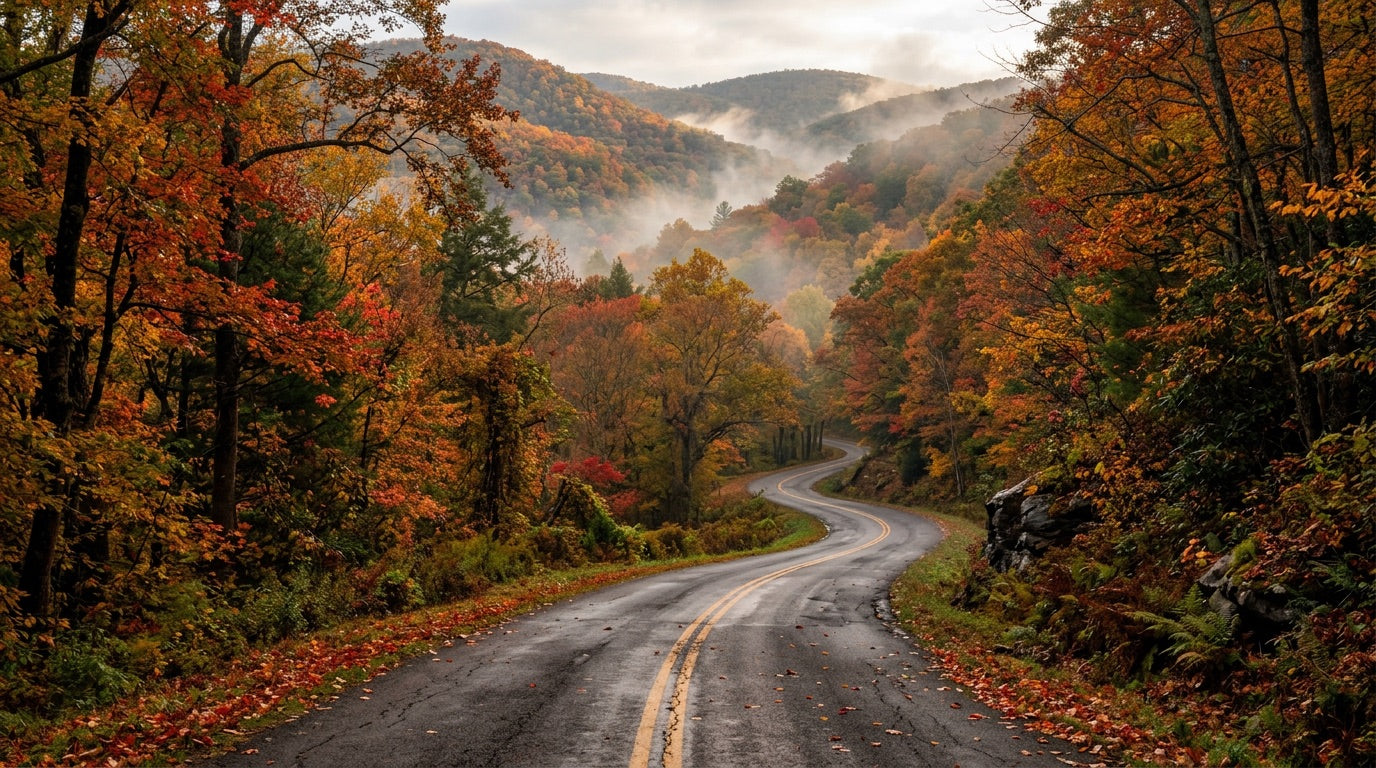
If you’re searching for “country road,” this is almost always the song you mean. “Take Me Home, Country Roads” was released as a single on April 12, 1971, on John Denver’s album Poems, Prayers & Promises. It reached No. 2 on the Billboard Hot 100 in late August 1971, behind the Bee Gees.
A song about West Virginia, written by people who didn’t live there
The song is credited to Bill Danoff, Taffy Nivert, and John Denver. The Danoff-Nivert couple got the idea while driving along Clopper Road in Montgomery County, Maryland, on their way to a family gathering. Danoff explained that the country roads of his New England childhood inspired him more than West Virginia itself.
The trio finished the song in the early hours of December 30, 1970, after a performance at Washington’s Cellar Door, and Denver played it onstage that same night. It was recorded in New York in January 1971.
Why everyone sings it
West Virginia made it one of its four official state songs in March 2014. West Virginia University has played it before every home football game since 1972, and tens of thousands of fans sing along after each win. It was inducted into the Grammy Hall of Fame in 1998 and added to the Library of Congress’s National Recording Registry in 2023.
The song has also traveled far. Olivia Newton-John covered it in 1973, and her version opens the Japanese animated film Whisper of the Heart (1995), from Studio Ghibli. In Europe, the dance version by Hermes House Band (2001), which reached No. 2 in Germany and Ireland, made it a fixture at parties and weddings. A simple melody, a chorus you remember after one listen, and a universal theme of going home: that’s the recipe for a song people sing without even knowing who wrote it.
Country music for dancing: songs that fill the floor
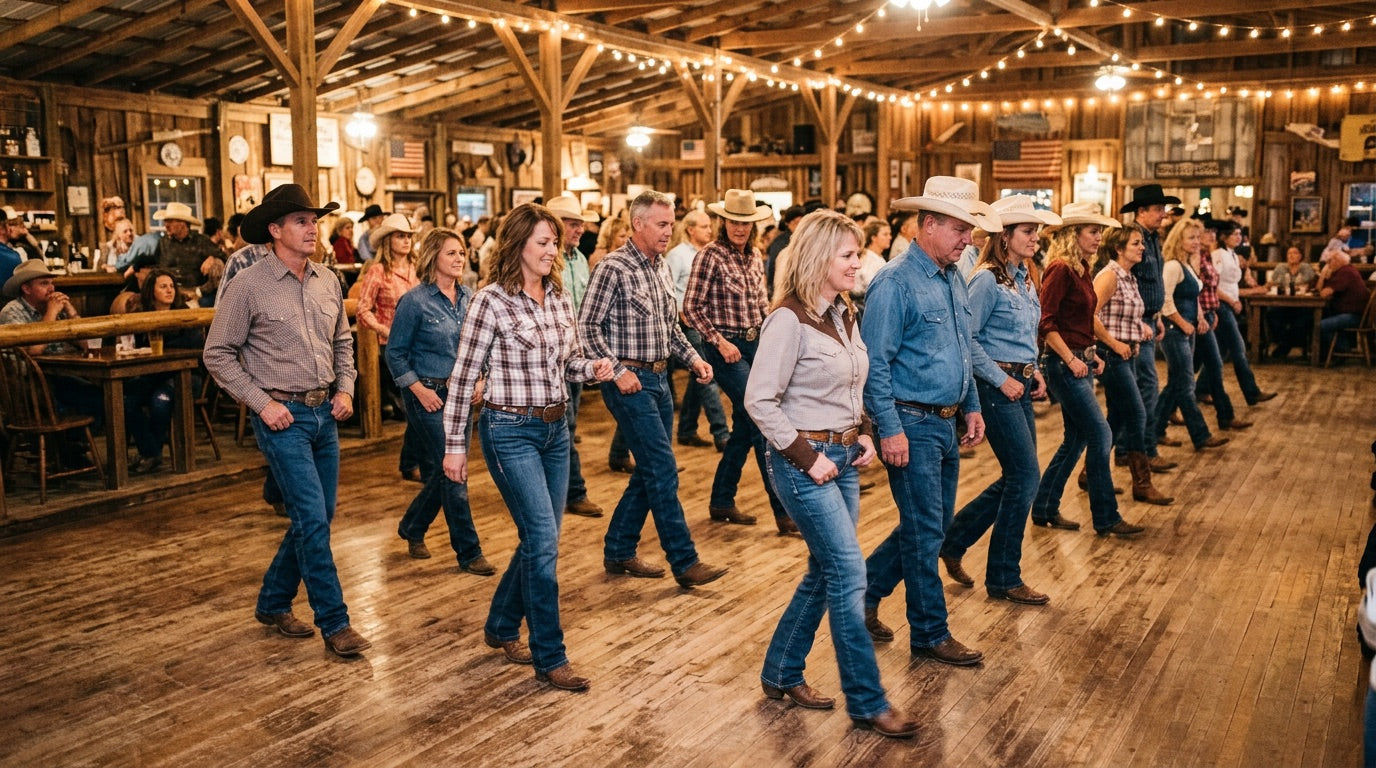
Good upbeat country music everyone knows has a steady tempo, a strong beat, and a predictable structure, so everyone can pick up the choreography again at the right moment. Line dancing is done solo, in rows, with a repeating sequence of steps that changes direction. Two-step and country waltz are partner dances.
| Song | Artist (year) | Dance style | Good to know |
|---|---|---|---|
| Achy Breaky Heart | Billy Ray Cyrus (1992) | Line dance | The music video introduced line dancing to the mainstream. |
| Boot Scootin’ Boogie | Brooks & Dunn (1992) | Line dance | The song itself is about a night of dancing at a Texas honky-tonk. |
| Copperhead Road | Steve Earle (1988) | Line dance | One of the most popular dances at clubs, blending country and rock. |
| Watermelon Crawl | Tracy Byrd (1994) | Line dance | The title itself names the dance described in the song. |
| Cotton Eye Joe | Rednex (1994) | Line dance, polka, group dances | A traditional tune dating back to before the Civil War, long danced as a square dance and polka in Texas. |
| Fancy Like | Walker Hayes (2021) | TikTok choreography, line dance | The family dance video helped launch the song’s success. |
| Islands in the Stream | Kenny Rogers and Dolly Parton (1983) | Partner dance | A mid-tempo track that’s ideal for an easygoing two-step. |
| Tennessee Whiskey | Chris Stapleton (2015) | Slow dance, country waltz | The slow triple meter is perfect for ending the night. |
The “Cotton Eye Joe” caveat
Purists often point out that Rednex’s version isn’t country in the strict sense. It’s a Eurodance track, produced in Sweden, that adds a drum machine and synthesizers to banjo and fiddle. But the tune itself is authentically American (the first printed version appeared in 1882), and the song spent three weeks at No. 1 in the U.K. in January 1995. The result: it’s probably the best-known country dance song in Europe, even though it’s never played on Nashville country radio.
Choosing the right boots for dancing
A slightly slippery leather sole, a stable heel, and a shaft that supports your ankle make all the difference during a three-hour night out. Our guide to choosing an outfit for line dancing and country nights explains what works on a dance-club floor.
Build your country party playlist (and choose an outfit to match)
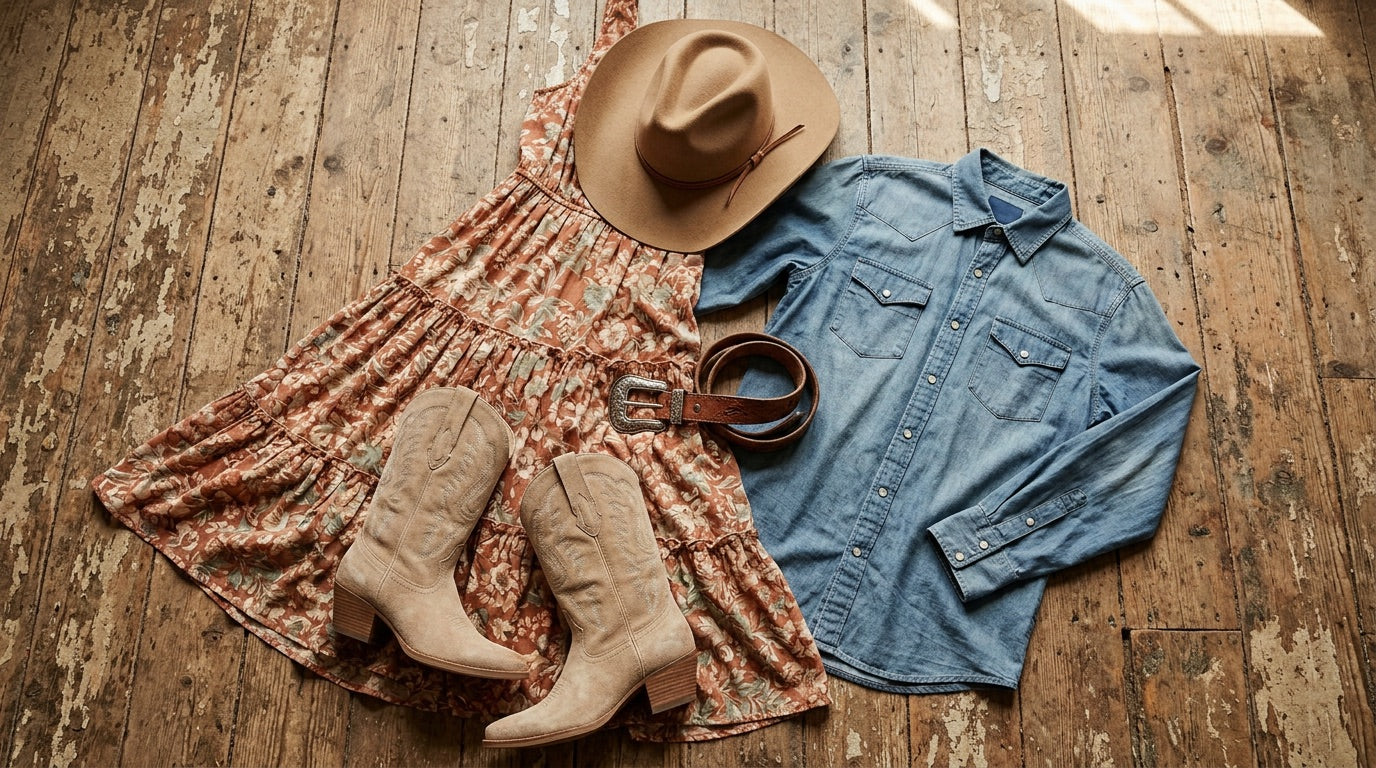
A great party isn’t about playing 40 hits at the same tempo. Build it in waves, like a dance-club DJ would. Here’s the structure that works best.
- Welcome (30 minutes): mid-tempo songs everyone recognizes, like “On the Road Again,” “Jackson,” “Wagon Wheel,” or “Chattahoochee.”
- Build the energy: line-dance classics like “Achy Breaky Heart,” “Boot Scootin’ Boogie,” “Copperhead Road,” and “Watermelon Crawl.” Leave two or three minutes between dances so beginners can catch their breath.
- Peak time: recent hits and crowd-pleasers like “Fancy Like,” “A Bar Song (Tipsy),” and “Texas Hold ’Em,” followed by “Cotton Eye Joe,” which gets everyone on the floor.
- Sing-alongs: “Take Me Home, Country Roads,” “Friends in Low Places,” and “9 to 5” are made for singing together.
- Wind down: “Islands in the Stream,” “Crazy,” then “Tennessee Whiskey” for partner dancing.
Your outfit matters almost as much as your playlist. For her, keep it simple with a cowgirl outfit (a flowing dress or jeans and a tied shirt) and a pair of women’s cowboy boots with a medium heel for dancing all night. For him, try a Western snap-button shirt, straight-leg jeans, and a pair of men’s cowboy boots that are already broken in. Our selection of men’s cowboy outfits brings together pieces that work well together.
A cowboy hat is the finishing touch that gives a party outfit a country feel. On the dance floor, choose a medium brim that won’t get in the way of the dancers next to you. And if the night continues with a concert, our article on what to wear to an indoor or outdoor country concert will help you adjust your outfit.
Explore our cowgirl clothing →
FAQ: famous country music
What’s the most famous country song in the world?
Two songs are in the running. Dolly Parton’s “Jolene” (1973) was named the greatest country song of all time by Rolling Stone in 2024. John Denver’s “Take Me Home, Country Roads” (1971) is probably the most widely sung along to, from American stadiums to European parties.
What country music should I dance to?
For line dancing, reliable favorites include “Achy Breaky Heart,” “Boot Scootin’ Boogie,” “Copperhead Road,” “Watermelon Crawl,” and “Cotton Eye Joe.” For partner dancing, “Islands in the Stream” works for a two-step, while “Tennessee Whiskey” is great for a slow dance or country waltz. Among recent hits, “Fancy Like” has its own choreography.
Who are the king and queen of country music?
Several artists have been given those titles. Roy Acuff, a Grand Ole Opry mainstay, was known as the “King of Country Music” and became the first living artist inducted into the Country Music Hall of Fame in 1962; George Strait is often called the “King of Country” today. The title “Queen” has historically gone to Kitty Wells, and fans also often use it for Dolly Parton or Loretta Lynn.
What’s the difference between country and Western music?
Western music originally referred to songs about cowboys and the American West, popularized by singing-cowboy movies and Bob Wills’s Western swing. Country music has stronger roots in Appalachia and the Southeast. Billboard grouped the two under “Country & Western” starting in 1949, before dropping “Western” in the 1960s.
Where did country music come from?
It began in the rural American South, blending British and Irish ballads, dance-hall fiddle, the African American–rooted banjo, and the blues. The industry took off in the 1920s with radio (Nashville’s Grand Ole Opry, starting in 1925) and the Bristol Sessions in 1927.
What are the best-known American country songs of the ’90s?
Garth Brooks’s “Friends in Low Places” (1990), Billy Ray Cyrus’s “Achy Breaky Heart” (1992), Brooks & Dunn’s “Boot Scootin’ Boogie” (1992), Alan Jackson’s “Chattahoochee” (1993), and Shania Twain’s “Man! I Feel Like a Woman!” (1999) are still among the most-played songs today.
Sources
- Wikipedia (EN): Bristol Sessions
- Wikipedia (EN): Grand Ole Opry
- Wikipedia (EN): Take Me Home, Country Roads
- Wikipedia (EN): Jolene (song), including the 2024 Rolling Stone ranking
- Wikipedia (EN): Nashville Sound
- Wikipedia (EN): Wanted! The Outlaws
- Wikipedia (EN): Old Town Road
- Wikipedia (EN): Cotton Eye Joe (Rednex song)


